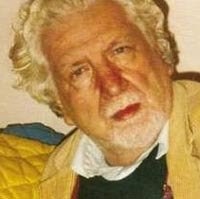
Nejad was born in İstanbul in 1923 to the son of the author, İzzet Melih Devrim, and the painter Fahrelnissa Zeid. He studied art at the İstanbul Academy of Fine Arts, studying under Bedri Rahmi Eyüboğlu, Zeki Kocamemi, Nurullah Berk and Leopold Levy. Turkish calligraphic art and Byzantine mosaic art, which he learned from Prof. Witmore, shaped his early artworks. During this time, Devrim was an active part of the founding of the “New” group. In 1946 he travelled to Paris and lived there for twenty two years visiting and exhibiting in many cities in Europe, the U.S., and the Near and Far East. His first group exhibition in Paris was the UNESCO International Exhibition titled “L’Art Turc d’aujourd’hui et d’autrefois” in 1946. Devrim also became the first Turkish painter to open a solo exhibition in Paris in 1947 at Gallery Allard. Curated by the dealer Leo Castelli, Devrim was among the 29 other artists to be exhibited at the Young Painters in U.S. and France exhibition at the Sydney Janis Gallery in New York in 1950. Devrim’s works were bought by the French Government and Musée d’Art Moderne de Paris. He was included in Paris School exhibitions during his lifetime with his unique style of geometric abstraction influenced by calligraphy, Byzantine and Ottoman architecture and Iznik tiles. Devrim settled in Poland, first in Warsaw in 1968 and then finally moved to Nowy-Sacz in the mid 1980s. He passed away in Nowy-Sacz in 1995. A member of the “Ecole de Paris” in the 1950’s, Devrim started producing paintings with black backgrounds besides his other colourful works in this period. After 1960s, and during the 1970s the artist gradually abandoned the line and acquired a lyrical and painterly style where bright, radiant colours and energetic brush strokes were dominantly felt. The colour planes and short brush strokes in these paintings can be seen as abstractions of mosaics. Devrim was never a follower of any artistic style, but remained a member of the somewhat flexible structure of the Ecole de Paris. His own style was defined by his inner world, colour and light, and although this style was more suitable for gouage, he succeeded in creating the same lightness with oils. According to J. Lassaigne, Nejad is bringing “innovative and solid solutions to the problems of space and rhythm". G. Boudaille has described Nejad’s paintings in 1960’s as “mirror of its creator, who is active, exciting, non-comforting but kind, complex, diversified, and variable”. Nejad’s art is an extension of abstract painting and the product of an opinion and sensitivity, gained with personal experience and knowledge.
Kronoloji / kayıt
Kayıt
2025-08-15 03:04:40