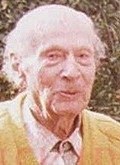
Mehmet Aziz Bey
I have just discovered that Mehmet Aziz (1893-1991) was the man who eradicated Malaria in Cyprus. Who knew? So when I started to investigate this extraordinary story, I was shocked to find that there is almost nothing written or documented about him. Not even a book. In fact, I could only find one (1) very grainy newspaper photo of him. Sadder still, there appears to be NO monument or memorial in Cyprus to honour his incredible and lasting legacy. Perhaps Mehmet Aziz is just another forgotten and unsung Cypriot hero. Well, not if I can help it. In my own small way, I have decided to create a portrait of him that I hope to incorporate into some sort of commemorative poster or stamp design (in case the Cypriot government decides one day to use it). It has now been 70 years since Aziz started his eradication programme to rid Cyprus of this deadly disease.
So who was Mehmet Aziz? As mentioned above, Aziz is credited for eradicating the Malaria disease in Cyprus. Nicknamed ‘The Fly Man’ by those who knew him, he was appointed as the Chief Health Inspector for the British Colonial Government of Cyprus during the 1930s and 1940s.
He was born in Kalo Chorio village (Greek: Καλό Χωριό, Turkish: Vuda) located in the Larnaca District on the 24 September 1893 and was the youngest of six children. In 1907, aged only 14 he travelled abroad to America with his older brother Hayrettin to study in Connecticut. I am not sure why he went there. In 1912, the brothers decided to return to Cyprus (again, not sure why). I am led to believe they narrowly missed boarding the ill-fated ship Titanic.
In 1914, a famous English scientist, Sir Ronald Ross, came to their village looking to employ English-speaking locals to help him investigate the extent of diseases such as Malaria on the island. Ross was awarded a Nobel Prize in 1902 for discovering that the Anopheles mosquito was the cause of Malaria. He spent a month in 1914 travelling around Cyprus measuring the spleen rate of the children infected by Malaria to determine the prevalence of the disease. He concluded that the spleen-rate in Cyprus averages 21 per cent, which was quite high for a European country. Ross knew that a warm puddle of still water was the ideal breeding ground for the mosquito larvae carrying the Malaria parasite. His report later that year implored the government and the villagers to do more to ensure that these breeding areas did not exist. The 21-year-old Aziz jumped at the chance to work alongside Ross and in doing so, received the education that would launch his career.
In 1916, Mehmet met and married Hıfsiye, who was the daughter of Hafız Mustafa, a famous tailor from the village of Nisou (Greek:Νήσου,Turkish:Dizdarköy). They had three children: a son Baber, and two daughters Türkan and Kamuran. It is thanks to Kamuran’s diary that we know something about her father.
Mehmet Aziz was the originator of the idea and the methodology to eradicate malaria in Cyprus, having studied similar attempts to control the disease in Egypt. He received Government funding to put together a team of experts called the ‘Expert Committee On Malaria’ and within three years: 1946, 1947 and 1948, he was able to coordinate the successful eradication of Malaria in Cyprus. Aziz often talked about the dedication and the hard work of his team. It was a difficult and at times, a hazardous job. His team of Cypriot Health Inspectors were: Ali Tevfik (responsible across Cyprus), Stelios M Sotiriu (responsible for Larnaca), Zenon Panayi Eliadis (responsible across Cyprus), Mihalis Tumlau (responsible for Paphos), Elefthorius Hristofidis (Karpazia) and Kostas Yiorgiu Fisher (responsible for Kyrenia).
Apart from eradicating Malaria in Cyprus, Aziz achieved some other remarkable feats. Between 1929 and 1948 he visited villages all over Cyprus and ran health education and information sessions for the villagers, showing slides and posters on typhoid, tuberculosis, echinococcosis, and trachoma. He educated the local women on dietary issues and health.
He discovered that ‘Leshmanianis syndrome disease’ was spread by a minutely small fly called Tartarian. In 1955, the fly was renamed Flepotoma Antonata Aziz in recognition of his discovery.
Mehmet Aziz was also responsible for all the health inspections, treatment and settlement of the war refugees who arrived on the island between the two world wars and later.
In 1950, Aziz became a professor of Health and Well Being at Beirut University where he educated students from various countries like Bahrain, Bangladesh, Sudan, Egypt and Arabia. He visited alumni in their country of origin to help them set up appropriate Health Services like the ones in Cyprus. While in these different countries he continued his research into various health issues and became a consultant to the World Health Organisation.
He returned to Cyprus in 1959 and was appointed to Cyprus Health Commission in 1960 when the Cyprus Republic was inaugurated. After the intercommunal problems arose in 1963 he headed the Cypriot Turkish Health Services Commissıon until 1973.
He was awarded an MBE in 1936, a CBE in 1946, the British Empire Medallion and the Ross İnstitute Award in recognition of his extraordinary work and achievements as the Chief Health Inspector in Cyprus. He became an Associate Serving of the Order of Brother St John and Red Cross and also the member of Royal Society of Health in 1958.
He published and distributed various publications and booklets on the prevention of disease throughout his working life. His own success in eradicating and preventing many diseases in Cyprus was published around the world from the Times and Daily Telegraph newspapers in London to the Communist Workers Chronicle in Moscow: they all described Mehmet Aziz as the ‘Great Saviour of Cyprus’. BBC broadcasts went out to millions of people around the world and told the story of this one man’s crusade to eradicate Malaria in Cyprus.
According to the American Medical Association, Aziz was widely honored for his achievement in Cyprus and called 'the great liberator.’ He was likened to St. Patrick for ridding his native land of a pest far more insidious than snakes. Aziz himself was quoted by the same journal as saying, "I was brought up in a village where sanitary conditions were very bad. Many young people died who probably would have lived had conditions been better. If in the course of my service I have done something for the improvement and welfare of my country, then that is my greatest pleasure."
Mehmet Aziz died in Nicosia in 1991. Strangely, none of his children ever married. His son (Baber) died many years ago and his two daughters are now quite old. Türkan (who was born in 1917) is almost 100. She was awarded an MBE as the first matron of the Nicosia Hospital and wrote the book "The death of friendship: A Cyprus Memoir" which was published in English in July 2000. Kamran (b.1922) is almost 94 years old and was one of the first Turkish Cypriot women pharmacists on the island. She is also a well-known musician and the composer of a famous song "Ah, my Cyprus". Both sisters still live together in the original Aziz family home on the Green Line in Nicosia. God willing, I hope to pay them a visit later this year and present them with my portrait of their father.
On behalf of all Cypriots both in Cyprus and abroad, I would like to say ‘thank you’ to Mehmet Aziz for his extraordinary work that has ultimately improved the health of his people and saved countless lives. Mehmet Aziz Bey – we salute you.
Kronoloji / kayıt
Kayıt
2025-08-15 05:16:57